CH 01 · Audio
Speaker cleaner test
This test plays short bursts of a low tone to try to move water from your speaker. Set the volume to a safe level, then start the test; nothing leaves your device.
About 165 Hz is the tone water-eject tools play. No phone maker publishes such a tone, and we know of no controlled study showing that it clears water. Makers advise drying the phone.
Start low and turn it up slowly, above all in headphones: loud tones can harm your ears.
Hold the phone with its speaker facing down so water can run out. It stops by itself after 59 seconds.
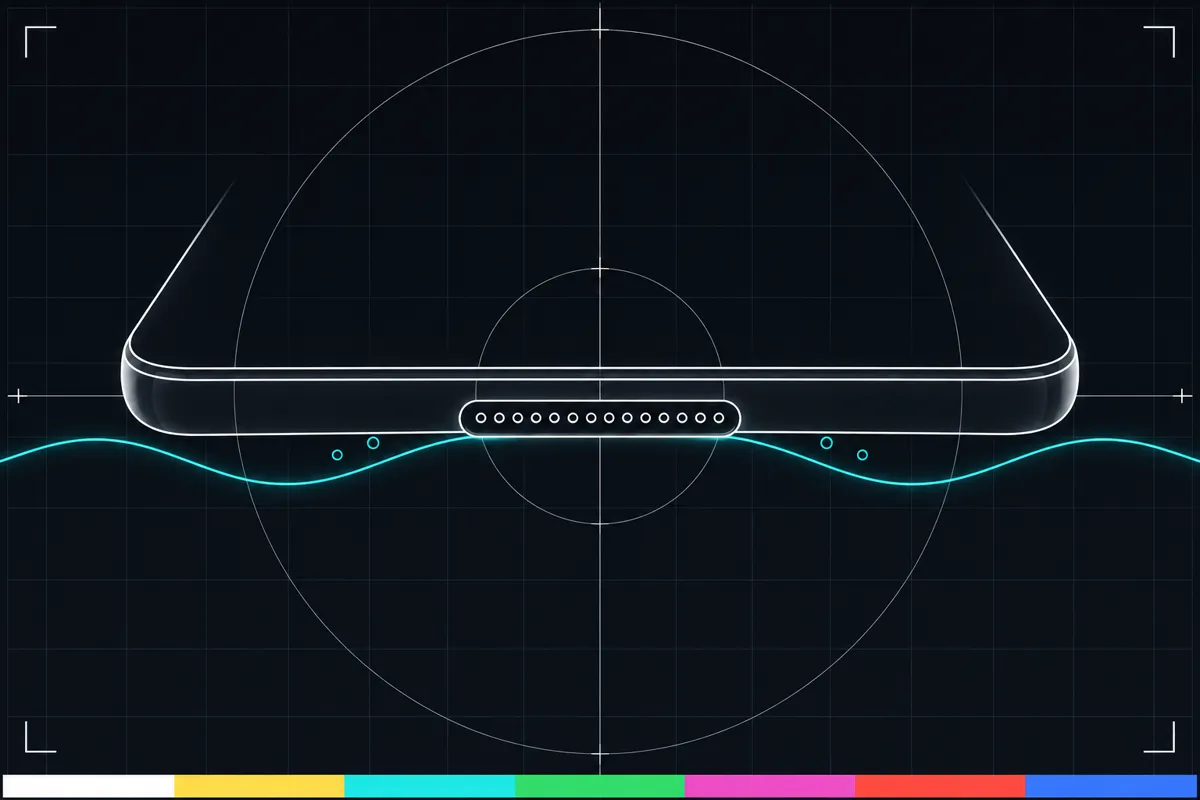
What the speaker cleaner does
A speaker cleaner plays a low-frequency tone pattern in short bursts, with pauses between them. The pattern used by tools like this is about 165 Hz. That figure is a commonly used frequency, but it does not prove that the tone will remove water from every speaker.
The pauses give you time to listen for a change. The test stops after a fixed time, so it does not play forever. Keep the volume at a comfortable level. A tone can sound loud, especially if the device volume is high.
What the result can tell you
Listen to the speaker during and after the tone pattern. If the sound becomes clearer, the pattern may have helped move water away from the speaker opening. If it remains muffled, the test has not shown a clear improvement. It does not measure the amount of water inside the device.
There is no controlled study we know of showing that this kind of tone pattern works to remove water. Treat the result as a quick check, not proof that the speaker is dry. A change in sound can be useful to notice, but it cannot confirm the cause.
If the sound is still muffled
The page links to the no-sound fix guide if the speaker still does not play clearly. A muffled sound may mean moisture is still affecting the speaker, or that another sound problem needs attention. The tone pattern cannot tell which cause applies.
Follow the advice from your device maker for a wet phone. Apple, Samsung and Google each publish support advice for drying their devices. Avoid assuming the tone has made the phone safe to use around moisture; check the maker’s guidance before taking further action.
Use the test with care
Start with a volume level that is comfortable, because the tone may be loud. You can stop the test if the sound is uncomfortable. The test ends on its own after a fixed time.
This is a speaker check, not a hearing test. It does not assess hearing or confirm that the device has no water inside. If the speaker still sounds wrong after the test and the maker’s drying advice, use the no-sound fix guide linked on the page.
Browser support
| Browser | Runs |
|---|---|
| Chrome and Edge on a computer | Yes |
| Firefox on a computer | Yes |
| Safari on a Mac | Yes |
| Safari on iPhone | Yes |
| Safari on iPad | Yes |
| Chrome on Android | Yes |
| Samsung Internet | Yes |
| Browsers inside apps | Yes |
Source: MDN browser-compat-data 8.1.8 · checked November 6, 2026
Questions
Does a speaker cleaner really remove water?
It plays a low-frequency tone pattern that may help move water away from the speaker opening. There is no controlled study we know of that shows this method works, so it cannot confirm that water has been removed.
What frequency does the water eject sound use?
The tone pattern is about 165 Hz, a figure reported for patterns used by tools like this. The tone plays in short bursts with pauses, and the frequency alone does not show whether the speaker is dry.
How do I know if the test worked?
Listen for clearer sound during or after the pattern. If the speaker remains muffled, there is no clear improvement; the test does not measure water inside the device or identify the reason for the sound.
Can I use this on a wet phone?
The test plays a tone, but it does not replace the maker’s advice for a wet phone. Check the drying guidance from your device maker, including Apple, Samsung or Google if one of them made your phone.
Is the speaker cleaner a hearing test?
No. It checks speaker output by playing a tone for you to hear. It does not assess your hearing.
What if the tone is too loud or the speaker still sounds bad?
Keep the device volume at a comfortable level and stop the test if the sound is uncomfortable. If the speaker remains muffled or silent, open the no-sound fix guide linked on the page.